

| What it is | Vitamin D is a fat-soluble vitamin that behaves like a hormone; your skin makes it from sunlight, hence the “sunshine vitamin.” |
| Why nerves | Nerve cells carry vitamin D receptors; the vitamin is tied to nerve-protective growth factors and healthy nerve signalling and inflammatory balance. |
| Dosage context | Common adult intakes are ~600–2,000 IU/day, but a blood test is the best guide because D is stored in the body. |
| Timeframe | Levels rebuild gradually; give a routine 8–12 weeks and retest if you can. Results vary. |
| See a doctor | Numbness, tingling, burning or weakness that is new, getting worse, spreading or affecting one side of the body only — and any nerve symptom that follows an injury or begins soon after a new medication. |
| Why it matters | Those patterns can point to diabetes, a compressed or trapped nerve, a vitamin B12 deficiency, thyroid disease or alcohol-related nerve damage. All of them are found with tests and treated by a clinician, not by a capsule. |
| What this article is | Plain-language background on one ingredient. It is not medical advice, and nothing described here — Nervixol included — is a treatment or cure for neuropathy or any nerve condition. |
Vitamin D is one of the most talked-about nutrients in wellness, and for good reason: it is genuinely difficult to get enough of it from a modern, mostly-indoor life. But its link to the nervous system is less well known than its famous role in bones. In truth, vitamin D for nerve health is a story about a nutrient that behaves less like a vitamin and more like a hormone — one that nerve cells themselves are set up to listen to. This guide explains what vitamin D actually does around the nerves, why the D2-versus-D3 distinction matters, the dosage context people use, where it comes from, and how to read it on a label. Nothing here is a treatment for a medical condition — it is background so you can make an informed choice.
Vitamin D is a fat-soluble vitamin, which means it is stored in the body's fat and released over time — unlike the water-soluble B and C vitamins that you need to replenish daily. It is often called the “sunshine vitamin” because your skin manufactures it when exposed to ultraviolet light from the sun. Once made or eaten, vitamin D is converted in the liver and kidneys into its active form, which then acts throughout the body.
Here is the part that reframes it: the active form of vitamin D is technically a hormone, and it interacts with vitamin D receptors found on a huge range of cells — including nerve cells. That is a strong clue that the nervous system is one of the places vitamin D is designed to work, not just the skeleton.
Vitamin D's nerve-relevant roles are best understood as supportive and regulatory rather than structural.
1. Nerve cells carry vitamin D receptors. The presence of these receptors on nervous-system cells means vitamin D can directly influence how those cells behave, from their growth to their signalling.
2. It is linked to nerve-protective factors. Vitamin D is associated with the production of neurotrophic factors — the growth-factor molecules that help nerve cells develop and maintain themselves. Think of these as the maintenance crew that keeps nerve tissue in good repair.
3. It supports healthy inflammatory balance. Vitamin D plays a part in the body's immune and inflammatory regulation. A calm, well-regulated internal environment is exactly the setting in which nerves are traditionally thought to function comfortably.
None of this makes vitamin D a treatment. Rather, it makes adequate vitamin D part of the healthy background that supports normal nerve function — which is why low vitamin D is so often flagged when general wellbeing is under review. For the mineral partner that vitamin D depends on, see our guide to magnesium for nerve health, and for the vitamins behind the nerve's protective coating, see B vitamins for nerve health.

When you shop for a supplement you will see two forms, and the difference is worth understanding.
This is the form your skin makes from sunlight and the form found in most animal foods. D3 is generally considered more effective at raising and maintaining blood levels, which is why the majority of quality supplements use it. Vegans can now find D3 made from lichen, so plant-based D3 is available too.
Derived from plant and fungal sources such as UV-exposed mushrooms, D2 is a valid option but is usually considered less potent at sustaining blood levels over time.
For most people, D3 is the sensible default. As with any supplement, the label should clearly state the form and the amount, ideally in both international units (IU) and micrograms (mcg) — a labelling clarity we always look for in how to choose a nerve health supplement.
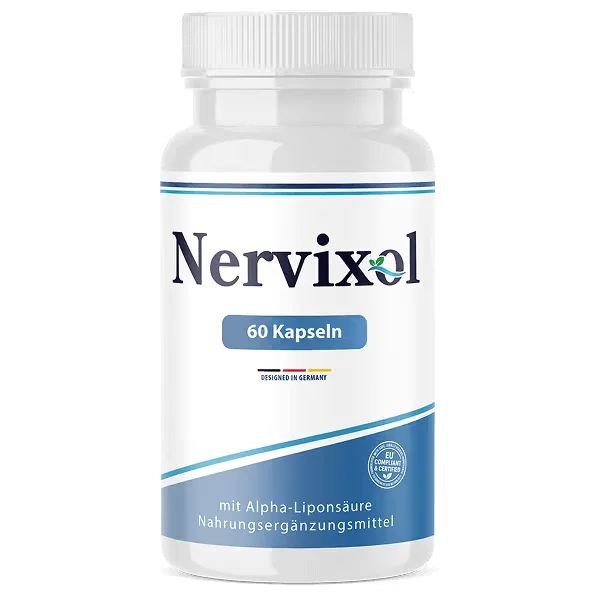
Nervixol focuses on a botanical blend — alpha-lipoic acid, ginkgo, ashwagandha, turmeric, sea buckthorn and bamboo — in one daily capsule, designed to sit alongside sensible sun, a nutritious diet and adequate vitamin D. Backed by a 60-day money-back guarantee.
See Nervixol PackagesVitamin D comes from three routes, and most people rely on a mix of all three:
The honest catch is that very few foods are naturally rich in vitamin D, and modern life limits sun exposure — indoor work, sunscreen (important for skin safety), higher latitudes, darker skin tones and older age all reduce skin production. This combination is why low vitamin D is one of the most widespread nutrient gaps in the world, and why so many people choose to supplement.
General adult intakes commonly fall around 600 to 2,000 IU (15 to 50 micrograms) per day, but vitamin D is one of the few nutrients where a blood test genuinely helps, because the ideal amount depends on your starting level, sun exposure, skin tone, weight and age.
Because vitamin D is fat-soluble and stored in the body, it is possible to take too much over time, which can cause calcium to build up. Very high doses should only be used under professional supervision. This is the opposite of a water-soluble vitamin, where excess is largely flushed out.
Vitamin D does not act alone. Magnesium is required to activate it, and vitamin K2 helps steer calcium to the right places, which is why many people take these together. Taking vitamin D with a meal that contains some fat improves absorption, since it is fat-soluble.
An important personalisation note. If you are pregnant, have a health condition, or take medication, speak with a qualified healthcare professional before starting vitamin D, and ask whether a blood test is appropriate. This article is general information, not a dosing prescription.
Vitamin D is a reminder that some of the most important nerve-supportive nutrients are the ones a modern lifestyle quietly strips away. Alongside sensible sun and a good diet, it pairs naturally with the antioxidants and botanicals we cover across this blog — from turmeric and curcumin to the everyday habits in our overview of everyday nerve support. As always, consistency is what turns a good intention into a real routine.
Vitamin D acts more like a hormone than a simple vitamin. Nerve cells carry vitamin D receptors, and the vitamin is involved in producing nerve-protective growth factors and in the healthy signalling and inflammatory-balance of nervous tissue. It supports normal nerve function and overall wellbeing rather than treating any medical condition.
Vitamin D2 (ergocalciferol) comes from plant and fungal sources, while D3 (cholecalciferol) is the form your skin makes from sunlight and the form in most animal foods. D3 is generally considered more effective at raising and maintaining blood levels, which is why most supplements use D3. Vegan D3 made from lichen is also available.
General adult intakes commonly fall around 600 to 2,000 IU (15 to 50 micrograms) per day, though the right amount depends on your blood level, sun exposure, skin tone and age. Because vitamin D is fat-soluble and stored in the body, a blood test is the best guide, and very high doses should only be taken under professional supervision.
Modern indoor lifestyles, sunscreen use, higher latitudes, darker skin tones and older age all reduce how much vitamin D the skin makes from sunlight, and very few foods are naturally rich in it. This combination makes low vitamin D one of the most widespread nutrient gaps worldwide, which is why testing and sensible supplementation are so common.
Vitamin D works within a team of nutrients. Magnesium is needed to activate vitamin D, and vitamin K2 helps direct calcium appropriately, which is why many people pair them. Take vitamin D with a meal containing fat for better absorption, and speak with a qualified professional about the right combination for you.
| Who we are | An independent team focused on plain-language nerve-health education — ingredients, mechanisms and daily habits. We translate research into practical background. We are an independent guide rather than the manufacturer or seller of Nervixol, and we are transparent that we earn a commission when a reader buys through our links. |
| Our promise | We describe traditional and general use, we avoid disease claims, and we always point you to a qualified professional for personal medical decisions. |
Vitamin D is a hormone precursor, and receptors for its active form appear throughout the nervous system. The nerve-health interest comes from a repeated observation: people with painful nerve symptoms tend to have lower vitamin D levels than people without them.
That association shows up in several independent datasets. A study in Diabetes/Metabolism Research and Reviews reported that vitamin D deficiency is associated with painful diabetic neuropathy, an earlier paper in Diabetic Medicine found reduced vitamin D levels in painful diabetic peripheral neuropathy, and a review in Current Diabetes Reviews frames diabetic neuropathy as a repercussion of vitamin D deficiency.
The counter-evidence is just as important, and most articles leave it out. A 2024 study in the Journal of the Peripheral Nervous System found that vitamin D levels do not correlate with the severity of idiopathic peripheral neuropathy. Association is not causation, low vitamin D may be a consequence of staying indoors with painful feet, and supplementing without a blood test is guessing.
Vitamin D is fat-soluble and its metabolism depends on magnesium, so read this alongside magnesium for nerve health and omega-3 for nerve health, and ask for both a vitamin D and a B12 level if you are already having bloods taken.
Every PubMed link above was opened and checked against the claim it is cited for. Research on an ingredient is not evidence about any finished product. Last verified 3 September 2026.
† These statements have not been evaluated by the FDA. This product is not intended to diagnose, treat, cure or prevent any disease. This article is for general information only and is not medical advice. Vitamin D is fat-soluble and stored in the body; consult a qualified healthcare professional before using high-dose vitamin D, especially if you are pregnant or take medication.
Affiliate disclosure: this is an independent guide, not the manufacturer or seller. Some links on this page are affiliate links and we may earn a commission at no extra cost to you, which never changes what is written here.