
| What it is | Magnesium is an essential mineral involved in hundreds of enzyme reactions and central to nerve and muscle function. |
| Why nerves | It helps regulate mineral flow across nerve membranes and acts as a natural counterbalance that keeps nerve signalling steady, not over-excited. |
| Dosage context | RDA ~310–420 mg elemental/day from all sources; supplements often add 100–350 mg. Focus on the elemental amount. |
| Timeframe | Give a routine 8–12 weeks of consistency; results vary. |
| See a doctor | Numbness, tingling, burning or weakness that is new, getting worse, spreading or affecting one side of the body only — and any nerve symptom that follows an injury or begins soon after a new medication. |
| Why it matters | Those patterns can point to diabetes, a compressed or trapped nerve, a vitamin B12 deficiency, thyroid disease or alcohol-related nerve damage. All of them are found with tests and treated by a clinician, not by a capsule. |
| What this article is | Plain-language background on one ingredient. It is not medical advice, and nothing described here — Nervixol included — is a treatment or cure for neuropathy or any nerve condition. |
Of all the minerals tied to how you feel day to day, magnesium may be the most quietly influential — and one of the most commonly under-consumed. It is involved in hundreds of reactions across the body, but its role in the nerves and muscles is where it earns its reputation for “calm.” This guide explains what magnesium actually does for the nerves, why the form on the label matters so much, the dosage context people use, where to find it in food, and how to read it on a supplement label. Nothing here is a treatment for a medical condition — it is background so you can make an informed choice.
Magnesium for nerve health is really about balance. Nerves need to fire, but they also need to settle down again, and magnesium sits at the heart of that on-off rhythm.
Magnesium is an essential dietary mineral, meaning your body cannot make it — you have to get it from food or supplements. It is a cofactor in more than 300 enzyme reactions, touching everything from energy production to protein building to DNA maintenance. A large share of the body's magnesium is stored in bone, with the rest inside cells, where much of its nerve-relevant work happens.
Here is the part that surprises people: surveys repeatedly suggest a meaningful portion of adults fall short of the recommended intake, partly because modern diets lean on refined foods that lose magnesium in processing. That gap between “how much we need” and “how much we actually eat” is a big reason magnesium is one of the most popular supplements in the world.
To understand magnesium's nerve role, picture a nerve as something that has to both switch on and switch off cleanly. Magnesium is deeply involved in the “off” side of that equation.
1. It regulates mineral flow across membranes. Nerve signals depend on the carefully controlled movement of charged minerals — sodium, potassium, calcium — in and out of the cell. Magnesium helps manage these gradients, keeping the electrical system orderly.
2. It counterbalances calcium. Calcium tends to excite nerve and muscle cells; magnesium tends to relax them. The two work as a natural push-pull. When magnesium is plentiful, that counterbalance helps keep nerve signalling steady rather than over-excited — which is the mechanism behind magnesium's traditional association with muscle relaxation and calm.
3. It supports energy and neurotransmitters. Because magnesium is required for producing and using ATP (cellular energy) and for balanced neurotransmitter activity, it underpins the metabolic side of healthy nerve function too.
This “calming counterbalance” role is why magnesium is traditionally associated with supporting normal muscle and nerve function, easing occasional cramps and restlessness, and encouraging a good wind-down at night. It complements the antioxidant and adaptogenic ingredients we cover elsewhere — for the stress-and-relaxation angle in particular, see our guide to ashwagandha for the nervous system.

Nothing matters more with magnesium than the form, because different magnesium compounds are absorbed very differently and behave very differently in the body. This is the single most common mistake shoppers make.
Magnesium bound to the amino acid glycine, which is itself calming. It is well absorbed and gentle on the stomach, making it a popular choice for nerve, relaxation and sleep support.
Well absorbed and widely available, though at higher doses it has a laxative effect — useful for some, inconvenient for others.
A newer form studied specifically for its ability to raise magnesium levels in the brain, so it appears in cognitive-focused products.
Cheap and common, but poorly absorbed — a large label number can be misleading because so little is taken up. It is mostly used for its laxative effect.
The practical rule — and the one we stress in how to choose a nerve health supplement — is to read the exact form and the elemental magnesium it provides, not just the weight of the compound.
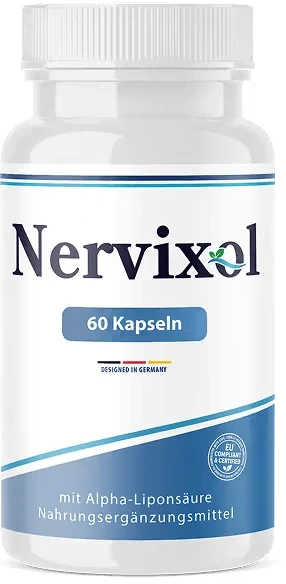
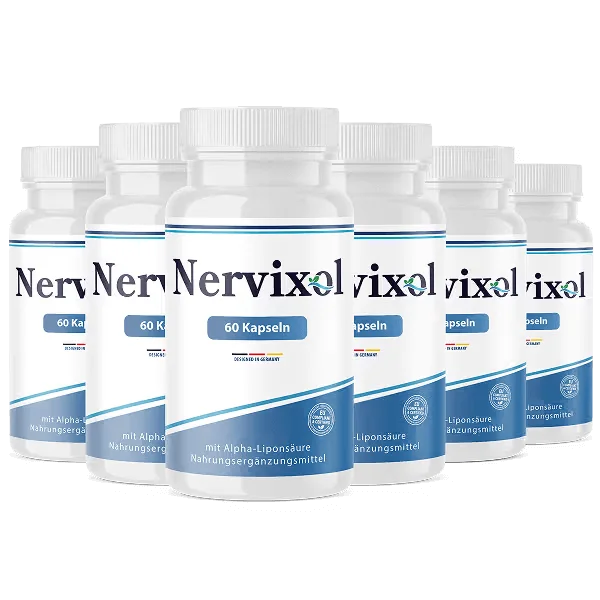
Nervixol focuses on a botanical blend — alpha-lipoic acid, ginkgo, ashwagandha, turmeric, sea buckthorn and bamboo — in one daily capsule, designed to sit alongside a magnesium-rich diet and a calm evening routine. Backed by a 60-day money-back guarantee.
See Nervixol PackagesThe good news is that plenty of whole foods are rich in magnesium:
The honest catch is that food processing strips magnesium out — refining whole grains removes much of it, for example — so a diet heavy in processed foods can fall short even if it looks varied. A well-chosen supplement in a well-absorbed form offers a reliable way to top up the difference, which is exactly why so many people use one.
Unlike some botanicals, magnesium has an official recommended dietary allowance: roughly 310–320 mg for adult women and 400–420 mg for adult men per day of elemental magnesium, from all sources combined.
Because that RDA counts food and supplements together, most supplements are designed to top up the diet rather than provide the whole amount — commonly 100 to 350 mg of elemental magnesium. Overshooting from supplements is what causes the classic loose-stool side effect, so more is not automatically better.
A label might say “magnesium glycinate 1,000 mg,” but only a fraction of that weight is actual magnesium — the rest is the glycine it is bound to. Always look for the elemental magnesium figure, usually shown with a percent daily value.
An important note on personalisation: the right amount depends on your diet and health. People with kidney disease must be especially careful, since impaired kidneys cannot clear excess magnesium, and magnesium can interact with certain antibiotics and other medications. Speak with a qualified healthcare professional before starting. This article is general information, not a dosing prescription.
Magnesium is a perfect illustration of why nerve support works best as a team rather than a single ingredient. Its calming, signalling role pairs naturally with B vitamins for the structural side — see our guide to B vitamins for nerve health — and with the daily habits covered in our overview of everyday nerve support. As always, consistency is what turns any of these from a good idea into a real routine.
Magnesium is a mineral involved in hundreds of enzyme reactions and is central to how nerves and muscles fire and relax. It helps regulate the movement of calcium and other minerals across nerve-cell membranes and acts as a natural counterbalance that keeps nerve signalling steady rather than over-excited. It supports healthy nerve and muscle function rather than treating any medical condition.
Well-absorbed, gentle forms are usually preferred for nerve and relaxation support: magnesium glycinate (bound to the calming amino acid glycine) is a popular choice, magnesium citrate is well absorbed but can loosen the stool, and magnesium L-threonate is studied for crossing into the brain. Magnesium oxide is cheap but poorly absorbed. The label should name the exact form and the elemental magnesium it provides.
The recommended dietary allowance for adults is roughly 310 to 420 mg of elemental magnesium per day from all sources. Supplements often provide 100 to 350 mg of elemental magnesium to top up the diet. Focus on the elemental amount, not the weight of the compound, and check with a qualified professional if you have kidney concerns.
Because magnesium is central to how nerves and muscles relax, it is traditionally associated with supporting normal muscle and nerve function and easing occasional cramps and restlessness. This describes general and traditional use, not a treatment. If you have persistent tingling or cramps, see a qualified professional to identify the cause.
Many people take magnesium in the evening because its relaxing role can support a wind-down routine and restful sleep, though it can be taken any time. Splitting the dose or taking it with food can improve comfort and absorption. Consistency day to day matters more than perfect timing.
| Who we are | An independent team focused on plain-language nerve-health education — ingredients, mechanisms and daily habits. We translate research into practical background. We are an independent guide rather than the manufacturer or seller of Nervixol, and we are transparent that we earn a commission when a reader buys through our links. |
| Our promise | We describe traditional and general use, we avoid disease claims, and we always point you to a qualified professional for personal medical decisions. |
Magnesium is a cofactor for hundreds of enzyme reactions and a natural gatekeeper at the NMDA receptor, which is why it is described as calming to an excitable nervous system. The research is mostly about status — whether you have enough — rather than about supplementing on top of enough.
A 2025 review in Nutrients on magnesium’s health effects, deficiency burden and future public-health directions is the broadest recent summary of how common low intake is, and a comprehensive review in Cureus on magnesium’s role in health and disease covers the physiology, including its neuromuscular role.
On the mechanism most relevant to a nerve formula, a 2025 systematic review and meta-analysis in Antioxidants examined magnesium’s role in oxidative stress and inflammation. None of this establishes magnesium as a treatment for nerve pain, and anyone with kidney disease should not supplement it without medical advice.
Magnesium status tends to travel with two others: read it alongside vitamin D and nerve health, since vitamin D metabolism depends on magnesium, and omega-3 for nerve health for the membrane side of nerve signalling.
Every PubMed link above was opened and checked against the claim it is cited for. Research on an ingredient is not evidence about any finished product. Last verified 3 September 2026.
† These statements have not been evaluated by the FDA. This product is not intended to diagnose, treat, cure or prevent any disease. This article is for general information only and is not medical advice. If you have kidney disease or take medication, consult a qualified healthcare professional before using magnesium supplements.
Affiliate disclosure: this is an independent guide, not the manufacturer or seller. Some links on this page are affiliate links and we may earn a commission at no extra cost to you, which never changes what is written here.