
| What they are | The B vitamins are a family of water-soluble nutrients; B12, B6, B1 and folate are the ones most tied to the nerves. |
| Why nerves | B12 and folate support the myelin sheath and signalling; B1 supports nerve energy metabolism; B6 is a cofactor for neurotransmitters. |
| Dosage context | Balanced B-complex products are common; watch total B6 (very high, long-term B6 can be counterproductive). |
| Timeframe | Give a routine 8–12 weeks of consistency; results vary. Confirm any deficiency with a clinician. |
| See a doctor | Numbness, tingling, burning or weakness that is new, getting worse, spreading or affecting one side of the body only — and any nerve symptom that follows an injury or begins soon after a new medication. |
| Why it matters | Those patterns can point to diabetes, a compressed or trapped nerve, a vitamin B12 deficiency, thyroid disease or alcohol-related nerve damage. All of them are found with tests and treated by a clinician, not by a capsule. |
| What this article is | Plain-language background on one ingredient. It is not medical advice, and nothing described here — Nervixol included — is a treatment or cure for neuropathy or any nerve condition. |
If there is one nutrient group the nerves cannot do without, it is the B vitamins. No other family of vitamins is so directly tied to how nerves are built, insulated and fired. That is why “B12 for nerves” is one of the most-searched phrases in the whole wellness space. This guide untangles the group — which B vitamins matter most for the nerves, exactly what each one does, the deficiency signs people ask about, where they come from in food, and how to read them on a label. Nothing here is a treatment for a medical condition — it is background so you can make an informed choice, and, importantly, a prompt to test rather than guess.
B vitamins for nerve health is really a story about teamwork. The B vitamins share pathways and depend on one another, which is why they are usually discussed — and often taken — together.
There are eight B vitamins in total, but four stand out in any nerve conversation.
B12 is the headliner. It is essential for maintaining the myelin sheath — the fatty insulation wrapped around nerve fibres that lets electrical signals travel quickly and cleanly. B12 is also needed to make healthy red blood cells and to keep the nervous system running. Because the body stores B12 and absorption can decline with age or with certain medications, a shortfall can build slowly and quietly, which is exactly why it comes up so often.
Thiamine is central to how nerve cells turn carbohydrate into usable energy. Nerves are metabolically hungry tissue, so a steady thiamine supply supports the energy production they depend on. A fat-soluble derivative called benfotiamine is sometimes used because it is absorbed differently.
B6 is a cofactor for dozens of enzyme reactions, including the synthesis of several neurotransmitters — the chemical messengers nerves use to communicate. B6 has an unusual twist, though: it is one of the few vitamins where too much, taken over a long time, can work against the nerves. More on that safety point below.
Folate works hand in hand with B12 in the methylation reactions that keep homocysteine in balance and support healthy nerve tissue. Because B12 and folate are so intertwined, a good formula considers them together.

Step back and the picture is elegant. Nerves need three things the B vitamins help provide: insulation (healthy myelin), energy (efficient metabolism) and signalling (neurotransmitters). B12 and folate underpin the first, B1 supports the second, and B6 contributes to the third. Remove any one and the team is weaker — which is the whole reason the B vitamins are so often grouped as a complex rather than sold as isolated stars.
This complements, rather than competes with, the antioxidant and circulation ingredients we cover elsewhere. Antioxidants like alpha-lipoic acid defend nerve tissue from oxidative stress, circulation botanicals like ginkgo support blood flow, and the B vitamins supply the raw materials for the nerve's structure and signalling. A well-rounded routine touches all three, a theme we develop in our guide on everyday nerve support.
This is the part everyone searches for, so let us be careful and clear. Because B12 is so central to healthy nerves, a shortfall is commonly discussed in terms of tingling or numbness in the hands and feet, changes in balance, and unusual fatigue. Low folate and low B1 are discussed in overlapping terms. Groups more likely to run low include older adults (absorption declines with age), people on strict plant-based diets (B12 is mainly in animal foods), and those taking certain long-term medications such as some acid reducers and diabetes drugs.
An essential caveat: these are general educational points, not a diagnosis. Tingling and fatigue have many possible causes, and only a blood test ordered by a clinician can confirm your B12, folate or B1 status. The smart move is to test, not guess — especially before taking high-dose single vitamins. If you have persistent or worsening symptoms, see a qualified healthcare professional.
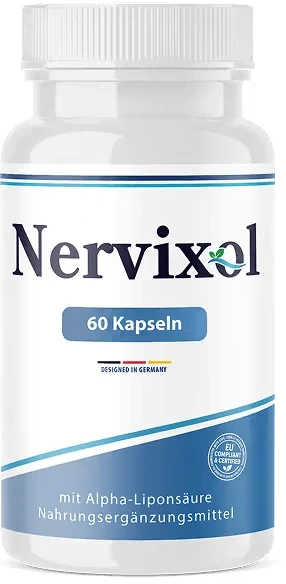
Nervixol focuses on a botanical blend — alpha-lipoic acid, ginkgo, ashwagandha, turmeric, sea buckthorn and bamboo — in one daily capsule, designed to sit alongside a B-vitamin-rich diet. Backed by a 60-day money-back guarantee.
See Nervixol PackagesMost vitamins are forgiving of excess because the body simply excretes what it does not need. Vitamin B6 is the notable exception in nerve health. While B6 supports the nerves at normal intakes, very high doses taken over months or years have been linked with nerve-related side effects — the opposite of the goal. This is not a reason to fear B6; it is a reason to respect the dose.
The practical takeaway: add up the total B6 across everything you take — a B-complex, a multivitamin and any standalone product can quietly stack up. A sensible formula keeps B6 in a reasonable range rather than chasing an eye-catching “mega-dose” number. This is exactly the kind of thing our checklist in how to choose a nerve health supplement teaches you to spot.
A varied diet supplies most people with most of what they need:
The honest catch is absorption. B12 in particular depends on stomach acid and a protein called intrinsic factor, both of which can decline with age or medication — so a diet that looks adequate on paper does not always translate into adequate status. That is why supplemental B12 and folate are so widely used, and why testing is the way to know for sure.
Because deficiencies are real and confirmable, B-vitamin dosing is better guided by testing than by a generic number. That said, a few reference points help you read a label:
For general support, a balanced B-complex is convenient because the vitamins work together. High-dose single B12 or B1 is sometimes used under professional guidance for a specific, confirmed reason.
Methylcobalamin (B12) and methylfolate (B9) are the active, ready-to-use forms the body does not have to convert. Some people prefer them, especially those with genetic variations affecting conversion; for most people standard forms also work. What matters is that the label states the form and the amount.
An important note on personalisation: the right approach depends on your diet, age, medications and any test results. Anyone with confirmed or suspected deficiency should be guided by a clinician. This article is general information, not a dosing prescription.
The three most associated with the nerves are B12 (cobalamin), B6 (pyridoxine) and B1 (thiamine), often joined by folate (B9). B12 and folate support the myelin sheath and healthy nerve signalling, B1 supports nerve energy metabolism, and B6 is a cofactor for neurotransmitters. They are usually considered together because they work as a team.
Because B12 is central to healthy nerves, a shortfall is commonly discussed in terms of tingling or numbness in the hands and feet, balance changes and fatigue. These are general educational points, not a diagnosis. Only a blood test ordered by a clinician can confirm B12 status, so see a qualified professional if you are concerned.
Yes — this is an important safety point. While B6 supports the nerves at normal amounts, very high doses taken over a long period have been linked with nerve-related side effects. This is why more is not better with B6, and why a sensible formula keeps it in a reasonable range. Check the total B6 across all your supplements.
For general nerve support most people find a balanced B-complex convenient because the B vitamins work together and share metabolic pathways. Individual high-dose B12 or B1 is sometimes used under professional guidance for specific reasons. The right choice depends on your diet, age and any test results, so discuss it with a qualified professional.
Methylated forms such as methylcobalamin (B12) and methylfolate (B9) are the active, ready-to-use versions the body does not have to convert. Some people prefer them, particularly those with genetic variations affecting conversion. For most people standard forms also work; a good label simply states which form and how much it provides.
| Who we are | An independent team focused on plain-language nerve-health education — ingredients, mechanisms and daily habits. We translate research into practical background. We are an independent guide rather than the manufacturer or seller of Nervixol, and we are transparent that we earn a commission when a reader buys through our links. |
| Our promise | We describe traditional and general use, we avoid disease claims, and we always point you to a qualified professional for personal medical decisions. |
B vitamins are the one nerve-health category where deficiency is a genuine, testable cause of symptoms — which is precisely why they should be measured rather than assumed.
Vitamin B12 is the clearest case. A review in the American Journal of Clinical Nutrition asking how common vitamin B-12 deficiency really is sets out how often it is missed, and a 2022 paper in Diabetes, Obesity and Metabolism describes how metformin-induced B12 deficiency can cause or worsen distal symmetrical neuropathy in people with diabetes. A systematic review in Diabetes & Metabolic Syndrome then looked at whether supplementing B12 in metformin-treated type 2 diabetes actually helps. If you take metformin, that is a blood test to ask for, not a supplement to guess at.
Vitamin B6 cuts both ways, and this is the part most labels never mention. A 2023 systematic review in Nutrients on the role of vitamin B6 in peripheral neuropathy and a review in Advances in Nutrition on the mechanisms of pyridoxine toxicity both describe how too much B6 over time can itself produce a sensory neuropathy. More is not better here.
For B1, a randomised controlled trial of vitamin B complex in alcoholic polyneuropathy gives a sense of what supplementation was tested for. The fat-soluble derivative is a separate topic covered in our benfotiamine versus thiamine comparison, and because B12 status and vitamin D status are so often low together in the same person, our guide to vitamin D and nerve health is worth reading next.
Every PubMed link above was opened and checked against the claim it is cited for. Research on an ingredient is not evidence about any finished product. Last verified 3 September 2026.
† These statements have not been evaluated by the FDA. This product is not intended to diagnose, treat, cure or prevent any disease. This article is for general information only and is not medical advice. If you have persistent or worsening symptoms, or suspect a vitamin deficiency, consult a qualified healthcare professional and ask about testing before starting high-dose B vitamins.
Affiliate disclosure: this is an independent guide, not the manufacturer or seller. Some links on this page are affiliate links and we may earn a commission at no extra cost to you, which never changes what is written here.