
| What they are | Both are forms of vitamin B1. Thiamine is the standard water-soluble form; benfotiamine is a fat-soluble derivative. |
| Key difference | Benfotiamine's fat-soluble structure tends to be absorbed more efficiently and can raise active B1 in tissues more readily — which is why nerve products favour it. |
| Dosage context | Benfotiamine supplements are often ~150–300 mg/day; plain thiamine is usually far smaller (the B1 RDA is ~1.1–1.2 mg). |
| Bottom line | Both supply B1; benfotiamine is the absorption-focused choice. Results vary — give any routine 8–12 weeks. |
| See a doctor | Numbness, tingling, burning or weakness that is new, getting worse, spreading or affecting one side of the body only — and any nerve symptom that follows an injury or begins soon after a new medication. |
| Why it matters | Those patterns can point to diabetes, a compressed or trapped nerve, a vitamin B12 deficiency, thyroid disease or alcohol-related nerve damage. All of them are found with tests and treated by a clinician, not by a capsule. |
| What this article is | Plain-language background on one ingredient. It is not medical advice, and nothing described here — Nervixol included — is a treatment or cure for neuropathy or any nerve condition. |
If you have shopped for a nerve-support supplement, you have almost certainly seen two versions of vitamin B1 on the shelves: plain thiamine and the tongue-twisting benfotiamine. They are closely related — benfotiamine is really thiamine in a different chemical coat — but that one structural change has a real effect on how the vitamin behaves in the body. This guide breaks down benfotiamine vs thiamine for nerve health: what vitamin B1 does for the nerves, why the fat-soluble form is absorbed differently, the dosage context for each, and how to read them on a label. Nothing here is a treatment for a medical condition — it is background so you can make an informed choice.
Before comparing the two forms, it helps to know why B1 matters at all. Thiamine is one of the eight B vitamins, and it plays a starring role in energy metabolism — specifically, in converting the carbohydrates you eat into the cellular fuel (ATP) that tissues run on. Nerve cells are among the most energy-hungry in the body, so a steady supply of B1 is part of what keeps nerve signalling working normally.
Because B1 is water-soluble, the body does not store much of it, which means a regular daily intake matters. This is exactly the kind of “essential cofactor” role we describe in our broader guide to B vitamins for nerve health, where B1, B6 and B12 each cover a different part of nerve upkeep.
Ordinary thiamine — you will see it on labels as thiamine hydrochloride or thiamine mononitrate — is the classic, water-soluble form of B1. It is inexpensive, well established and perfectly adequate for meeting everyday nutritional needs, which is why it is the form used to fortify foods like bread and cereal.
The one limitation is absorption. Because thiamine is water-soluble, the amount the gut can take up in a single dose is limited; beyond a certain point, extra thiamine is simply excreted. For general daily nutrition that is not a problem, but it is the gap that benfotiamine was designed to address.
Benfotiamine is a synthetic, fat-soluble derivative of thiamine. That single change matters because fat-soluble compounds pass through cell membranes — which are themselves fatty — more readily. In practice, benfotiamine tends to be absorbed more efficiently than ordinary thiamine and can raise the active form of B1 in tissues, including the nerves, more readily at comparable amounts.
Once inside the body, benfotiamine is converted into the same active vitamin B1 that thiamine provides — so it is not a different nutrient, just a more absorbable delivery vehicle. This absorption advantage is the whole reason benfotiamine has become a favourite in nerve-focused supplements, particularly those aimed at comfort in the hands and feet.
Nerve comfort in the hands and feet is closely tied to healthy circulation and steady nerve-cell energy — the same themes we explore in our guide to ginkgo biloba for circulation and nerve support. Benfotiamine's role sits on the energy-and-metabolism side of that picture.
The honest takeaway is that this is not a case of one form being “good” and the other “bad.” Thiamine is entirely adequate for meeting the B1 RDA, and most people already get enough from a varied diet. Benfotiamine is the choice when the goal is a higher, better-absorbed intake specifically for nerve support — which is exactly the kind of formulation decision we unpack in how to choose a nerve health supplement.
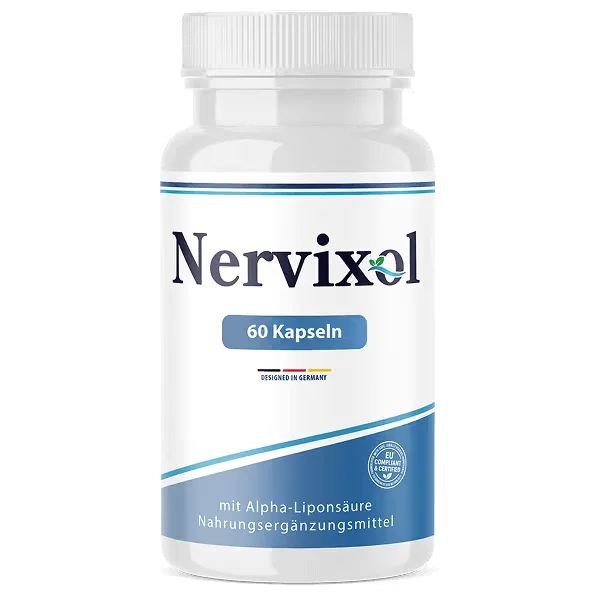
Nervixol focuses on a botanical blend — alpha-lipoic acid, ginkgo, ashwagandha, turmeric, sea buckthorn and bamboo — in one daily capsule, designed to sit alongside a B-vitamin-rich diet and everyday healthy habits. Backed by a 60-day money-back guarantee.
See Nervixol PackagesWhichever supplement form you consider, a B1-rich diet is the foundation:
The catch is that refining grains strips out much of their thiamine — which is why so many staple foods are fortified with it — and heavy alcohol use interferes with B1 absorption. Those are the situations where extra attention to B1 intake becomes most relevant.
The recommended dietary allowance for thiamine is small — roughly 1.1 mg for women and 1.2 mg for men per day — because that is all the body needs to meet its basic requirement. General thiamine supplements therefore tend to be modest.
Benfotiamine is a different story. Because it is used for its absorption advantage in targeted formulas, supplements commonly provide roughly 150 to 300 mg per day, sometimes split into two doses. Vitamin B1 has no established upper limit and excess is generally excreted, which contributes to its good safety record, but more is not automatically better and the sensible approach is to match the amount to your goal.
An important personalisation note. If you take medication, drink heavily, are pregnant, or have a health condition, speak with a qualified healthcare professional before starting a higher-dose B1 supplement. Persistent numbness or tingling always deserves a professional assessment to find the cause. This article is general information, not a dosing prescription.
The benfotiamine-versus-thiamine question is really a smaller version of a theme that runs through this whole blog: the form on the label often matters as much as the ingredient name. It is the same lesson we draw out for magnesium and for the antioxidants in our overview of everyday nerve support. Whichever form of B1 you choose, consistency is what turns a good idea into a real routine.
Thiamine (vitamin B1) is the standard water-soluble form. Benfotiamine is a fat-soluble derivative of thiamine that is absorbed differently and can raise the active form of B1 in tissues more readily than ordinary thiamine at comparable amounts. Both ultimately supply the body with vitamin B1 activity.
Benfotiamine's fat-soluble structure means it tends to be absorbed more efficiently, which is why it is popular in nerve-support products. That does not make ordinary thiamine ineffective, and thiamine is perfectly adequate for general daily intake. The better choice depends on your goals, and both support normal nerve function rather than treating disease.
Vitamin B1 is essential for turning carbohydrates into the energy nerve cells run on, and it supports healthy nerve signalling. Because nerves are energy-hungry, adequate B1 underpins their normal function. This describes general nutritional support, not a treatment for any medical condition.
Supplements commonly provide benfotiamine in the range of roughly 150 to 300 mg per day, sometimes split into two doses, while general thiamine supplements are often much smaller because the RDA for B1 is only around 1.1 to 1.2 mg. Focus on the labelled amount and form, and check with a qualified professional.
Yes, B vitamins are often taken together because they work as a team, and many nerve-support formulas combine B1 with B6, B12 and folate. B1 has no established upper limit and excess is generally excreted, but it is still wise to keep total intakes sensible and to speak with a qualified professional if you take medication.
| Who we are | An independent team focused on plain-language nerve-health education — ingredients, mechanisms and daily habits. We translate research into practical background. We are an independent guide rather than the manufacturer or seller of Nervixol, and we are transparent that we earn a commission when a reader buys through our links. |
| Our promise | We describe traditional and general use, we avoid disease claims, and we always point you to a qualified professional for personal medical decisions. |
Benfotiamine is a synthetic, fat-soluble derivative of thiamine (vitamin B1), and the argument for it rests on two separate claims: that it is absorbed better, and that better absorption changes outcomes. The evidence for the first is stronger than for the second.
On absorption, a pharmacokinetic study in the Journal of Clinical Pharmacology comparing benfotiamine with thiamine hydrochloride measured the bioavailability difference directly, and a paper in BMC Pharmacology showed benfotiamine has different mechanisms of action and a different pharmacological profile from lipid-soluble thiamine disulfide derivatives. So the two forms are genuinely not interchangeable.
On outcomes, the named trials are small. The BEDIP study, a three-week randomised controlled pilot in Int J Clin Pharmacol Ther and the larger BENDIP study, a randomised, double-blind, placebo-controlled clinical study reported in Exp Clin Endocrinol Diabetes both tested benfotiamine in diagnosed diabetic polyneuropathy — a clinical population, under supervision, at doses set by the researchers.
If you are choosing between B1 forms, the wider vitamin context in our guide to B vitamins for nerve health matters more than the form itself; and if you are comparing pathways rather than vitamins, see alpha-lipoic acid and acetyl-L-carnitine.
Every PubMed link above was opened and checked against the claim it is cited for. Research on an ingredient is not evidence about any finished product. Last verified 3 September 2026.
† These statements have not been evaluated by the FDA. This product is not intended to diagnose, treat, cure or prevent any disease. This article is for general information only and is not medical advice. If you have persistent numbness or tingling, or take medication, consult a qualified healthcare professional.
Affiliate disclosure: this is an independent guide, not the manufacturer or seller. Some links on this page are affiliate links and we may earn a commission at no extra cost to you, which never changes what is written here.