
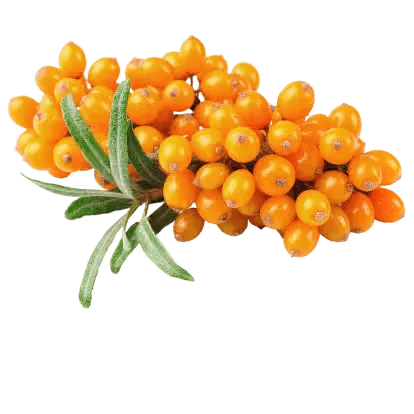
| What it is | Sea buckthorn is a bright-orange berry (Hippophae rhamnoides) prized for its unusually dense mix of antioxidants and a rare fatty acid. |
| Why nerves | Its flavonoids, vitamin C, carotenoids and omega-7 support the body's antioxidant defences and healthy tissues — the environment nerves rely on. |
| Dosage context | Oils often list ~1–2 g/day; standardised fruit extracts list smaller milligram amounts. Check the form and the part of the berry used. |
| Timeframe | Give a routine 8–12 weeks of consistency; results vary. |
| See a doctor | Numbness, tingling, burning or weakness that is new, getting worse, spreading or affecting one side of the body only — and any nerve symptom that follows an injury or begins soon after a new medication. |
| Why it matters | Those patterns can point to diabetes, a compressed or trapped nerve, a vitamin B12 deficiency, thyroid disease or alcohol-related nerve damage. All of them are found with tests and treated by a clinician, not by a capsule. |
| What this article is | Plain-language background on one ingredient. It is not medical advice, and nothing described here — Nervixol included — is a treatment or cure for neuropathy or any nerve condition. |
Among the botanicals that appear in the nerve-health conversation, sea buckthorn is one of the most nutritionally remarkable and one of the least understood. Most people have never eaten the berry — it is intensely tart, almost impossible to enjoy raw — yet it shows up in premium skin oils, wellness shots and, increasingly, on the labels of nerve-support formulas. This guide explains what sea buckthorn actually is, why it earns its place next to more famous ingredients, how it works in the body, and how to read it on a supplement label. Nothing here is a treatment for a medical condition — it is background so you can make an informed choice.
Sea buckthorn for nerve health is not about a single dramatic effect. It is about the berry's role as a concentrated source of the antioxidants and healthy fats that support the tissues nerves live in. To see why that matters, it helps to start with the plant itself.
Sea buckthorn is a hardy, thorny shrub that grows in some of the harshest places on earth — windswept coastlines, high-altitude plateaus and cold, dry mountain valleys across Europe and Asia. To survive that environment, the plant packs its small orange berries with an extraordinary density of protective compounds. That is the whole point of the ingredient: a berry that had to defend itself against extreme sun, cold and drought ends up rich in exactly the antioxidant molecules that interest nutrition scientists.
The berry has been used in traditional systems of medicine for centuries, from Tibetan and Mongolian practice to ancient Greek texts — the botanical name Hippophae nods to an old belief that it made horses' coats shine. Modern interest is more precise: researchers now measure the specific vitamins, carotenoids, flavonoids and fatty acids the berry contains, and it consistently ranks among the most nutrient-dense fruits studied.
Nerve fibres are wrapped in fatty membranes and, like all living tissue, they are exposed to free radicals — reactive molecules that in excess drive what scientists call oxidative stress. Sea buckthorn contributes to nerve support through several overlapping properties rather than one headline mechanism.
1. A broad antioxidant profile. Sea buckthorn is rich in flavonoids (including quercetin and related compounds), vitamin C and carotenoids such as beta-carotene and zeaxanthin. Antioxidants are the counterweight to oxidative stress, and the berry supplies several classes at once rather than a single type — a “spread” that can complement other antioxidants in a formula.
2. Omega-7 and healthy membranes. Sea buckthorn is one of the richest plant sources of omega-7 (palmitoleic acid), a monounsaturated fatty acid found in only a handful of foods. Fatty acids are the building blocks of cell membranes, and nerves are especially membrane-dependent tissue. Omega-7 is studied for its role in membrane health and metabolic balance, which is part of why the berry stands apart from ordinary fruit.
3. Moisture and mucous-membrane support. One of sea buckthorn's best-documented traditional uses is supporting the body's moist tissues and mucous membranes. Healthy, well-hydrated tissue is simply a better environment for every system, nerves included.
Put together, these are the reasons sea buckthorn is traditionally associated with general antioxidant and nutritional support for the tissues nerves depend on. It is featured, named on the label, in the Nervixol formula as part of a broad antioxidant blend — the idea being that different antioxidant plants cover different ground.
Most of us have heard of omega-3 and omega-6. Omega-7 is far less familiar, and that is exactly what makes sea buckthorn interesting. Omega-7 refers mainly to palmitoleic acid, a monounsaturated fat your body can make in small amounts but that is scarce in the diet. Sea buckthorn — specifically the pulp oil pressed from the fruit — is one of the densest natural sources known.
Why does a fatty acid belong in a nerve-health article? Because nerves are, structurally, a fat-rich tissue. The insulating myelin sheath that lets nerve signals travel quickly is built largely from lipids, and every nerve cell is bounded by a fatty membrane. A diet and routine that supplies healthy fats gives the body the raw material it uses to maintain those structures. Omega-7 is one piece of that broader picture, and sea buckthorn happens to be the plant that concentrates it.
Here is a distinction most shoppers miss. Sea buckthorn yields two quite different oils, and a good label tells you which one it uses.
Pressed from the soft flesh of the berry, pulp oil is the deep-orange one. It is the richer source of omega-7 palmitoleic acid and of the carotenoids that give it its colour. When a product highlights omega-7, it is almost always talking about pulp oil.
Pressed from the tiny seeds, this oil is paler and higher in omega-3 and omega-6 and in plant sterols. It has its own merits but a different nutritional signature.
Neither is “better” in the abstract — they simply do different jobs. What matters is that the label makes clear which oil, or which part of the berry a standardised extract comes from, so you are not guessing. This is the same principle we apply to every ingredient in our guide on how to choose a nerve health supplement.
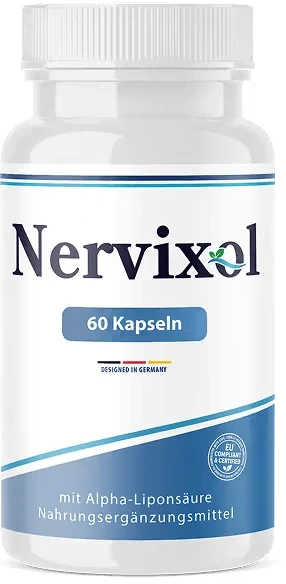
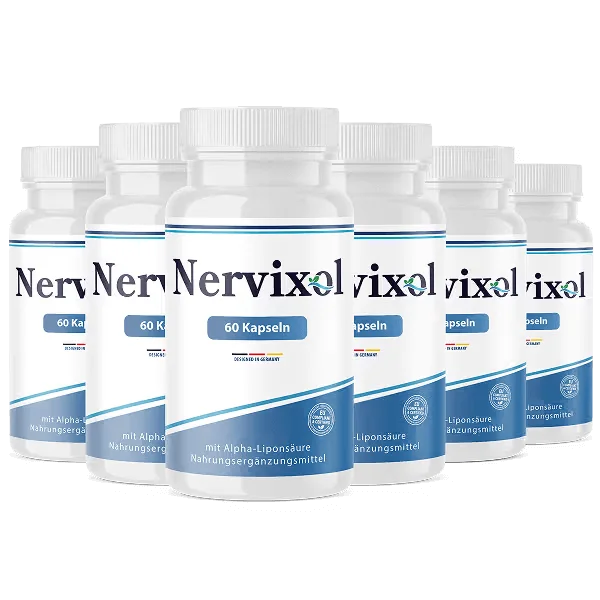
Nervixol features sea buckthorn alongside a botanical blend — alpha-lipoic acid, ginkgo, ashwagandha, turmeric and bamboo — in one daily capsule, backed by a 60-day money-back guarantee.
See Nervixol PackagesYou will rarely find fresh sea buckthorn at the supermarket — the berries are too tart and too delicate to ship well. Instead, the plant reaches most people in processed forms:
For a measured, repeatable daily amount, a standardised extract or oil in capsule form is the most practical route — the same logic that leads people to a supplement rather than trying to eat their way to a specific dose.
Because sea buckthorn is a food-based botanical and not an essential nutrient, there is no official recommended daily allowance. Dosage instead follows the form:
Sea buckthorn oil products commonly list roughly 1 to 2 grams per day, sometimes split across soft-gels. The omega-7 content is the headline figure to look for on an oil.
In a multi-ingredient capsule, sea buckthorn usually appears as a concentrated fruit extract in the low hundreds of milligrams, chosen to complement the other antioxidants rather than dominate the formula.
An important note on personalisation: the right amount depends on the form, your overall diet and any medications you take. Sea buckthorn is generally well tolerated as a food, but if you take blood-thinning or blood-pressure medication, speak with a qualified healthcare professional before adding a concentrated supplement. This article is general information, not a dosing prescription.
No single antioxidant does everything, which is why sea buckthorn is usually part of a blend rather than a solo act. Its water- and fat-soluble antioxidants pair naturally with a versatile antioxidant like alpha-lipoic acid, and with the structural mineral silica supplied by bamboo extract. Thinking in terms of a team of nutrients — rather than one magic ingredient — is the more realistic way to support nerve comfort over time, a theme we develop in our guide on everyday nerve support.
When you compare sea buckthorn products, a good label makes these things obvious:
Sea buckthorn is rich in antioxidant flavonoids, vitamin C and carotenoids, plus the rare omega-7 fatty acid (palmitoleic acid). Together these support the body's defence against oxidative stress and help maintain healthy mucous membranes and moisture. That is why the berry is traditionally associated with general antioxidant support for the tissues nerves depend on. It supports healthy nerves rather than treating any medical condition.
Omega-7 refers mainly to palmitoleic acid, a monounsaturated fatty acid found in only a few foods. Sea buckthorn is one of the richest plant sources, and it is especially concentrated in the pulp oil pressed from the berry. Omega-7 is studied for its role in healthy membranes and metabolic balance, which is part of why sea buckthorn stands out among berries.
They are different. Pulp (fruit) oil is the richer source of omega-7 palmitoleic acid and carotenoids, giving it a deep orange colour. Seed oil is higher in omega-3 and omega-6 and the plant sterols. Neither is wrong — a good label states which oil, or which part of the berry the extract comes from, so you know what you are getting.
There is no official daily allowance because sea buckthorn is a food-based botanical, not an essential nutrient. Oil products often list a gram or two per day, while standardised fruit extracts list a smaller milligram amount. The right amount depends on the form, your diet and your goals, so check the label and speak with a qualified healthcare professional if you take medication.
Antioxidant and nutritional support is gradual, not immediate. Most people give a daily routine at least 8 to 12 weeks of consistent use alongside supportive habits before judging it. Individual results vary and are not guaranteed.
| Who we are | An independent team focused on plain-language nerve-health education — ingredients, mechanisms and daily habits. We translate research into practical background. We are an independent guide rather than the manufacturer or seller of Nervixol, and we are transparent that we earn a commission when a reader buys through our links. |
| Our promise | We describe traditional and general use, we avoid disease claims, and we always point you to a qualified professional for personal medical decisions. |
Sea buckthorn (Hippophae rhamnoides) is a berry with an unusual composition: high vitamin C, a dense flavonoid profile and a fruit-pulp oil rich in palmitoleic acid, the fatty acid marketed as omega-7. That composition is the reason it appears in antioxidant blends.
A review in Food Research International asking why sea buckthorn is so exceptional catalogues the phytochemistry, and a 2023 comprehensive review in the Journal of Agricultural and Food Chemistry covers the botany, traditional uses, phytonutrients, quality markers and applications in more detail. One of its major flavonoids has its own literature: a review of the pharmacological effects of isorhamnetin in Biomedicine & Pharmacotherapy summarises what that compound has been shown to do in laboratory models.
Here is the limit, stated plainly: none of this is nerve research. Sea buckthorn has not been tested for numbness, tingling or nerve conduction in humans, and its role in a nerve formula is as an antioxidant and skin-and-mucous-membrane ingredient rather than a nerve-specific one. For the ingredients in the same blend that do have human nerve trials, see turmeric and curcumin and omega-3 for nerve health.
Every PubMed link above was opened and checked against the claim it is cited for. Research on an ingredient is not evidence about any finished product. Last verified 3 September 2026.
† These statements have not been evaluated by the FDA. This product is not intended to diagnose, treat, cure or prevent any disease. This article is for general information only and is not medical advice. If you have persistent or worsening symptoms, or take blood-thinning or blood-pressure medication, consult a qualified healthcare professional before using sea buckthorn supplements.
Affiliate disclosure: this is an independent guide, not the manufacturer or seller. Some links on this page are affiliate links and we may earn a commission at no extra cost to you, which never changes what is written here.